


The original McIntosh loudspeaker concept, rebuilt for modern systems
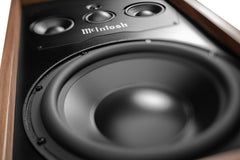
The McIntosh ML1 Loudspeaker Mk II is a modern reinterpretation of the first loudspeaker McIntosh introduced in 1970. It retains the broad, furniture-like proportions and American Walnut character associated with the original ML1, but its drivers, crossover, enclosure engineering, protection circuits, connections, and included stands were developed for contemporary high-performance systems.
This sealed 4-way loudspeaker uses five drivers, including a 12-inch woofer, and is rated for amplifiers from 75 to 600 watts. Its frequency response extends from 27Hz to 45kHz, giving the ML1 Mk II the bass reach and dynamic capacity expected from a large full-range speaker while avoiding the tall, narrow appearance of a conventional floorstanding tower.
ML1 Mk II highlights
- Modern successor to McIntosh's first loudspeaker, introduced in 1970
- Sealed 4-way acoustic-suspension enclosure with five separate drivers
- 12-inch LD/HP woofer with bass extension to 27Hz
- Two 4-inch lower-midrange drivers in a sealed internal sub-enclosure
- One 2-inch soft-dome upper-midrange driver
- One 3/4-inch titanium-dome tweeter
- 75–600 watt recommended amplifier range
- 8-ohm nominal impedance and 85dB sensitivity
- Symmetrical driver arrangement with no dedicated left or right speaker
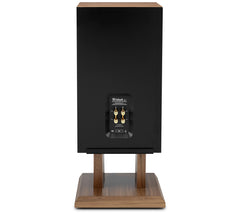
- Separate high- and low-frequency connections for bi-wiring or bi-amping
- American Walnut solid woods and veneers with a satin finish
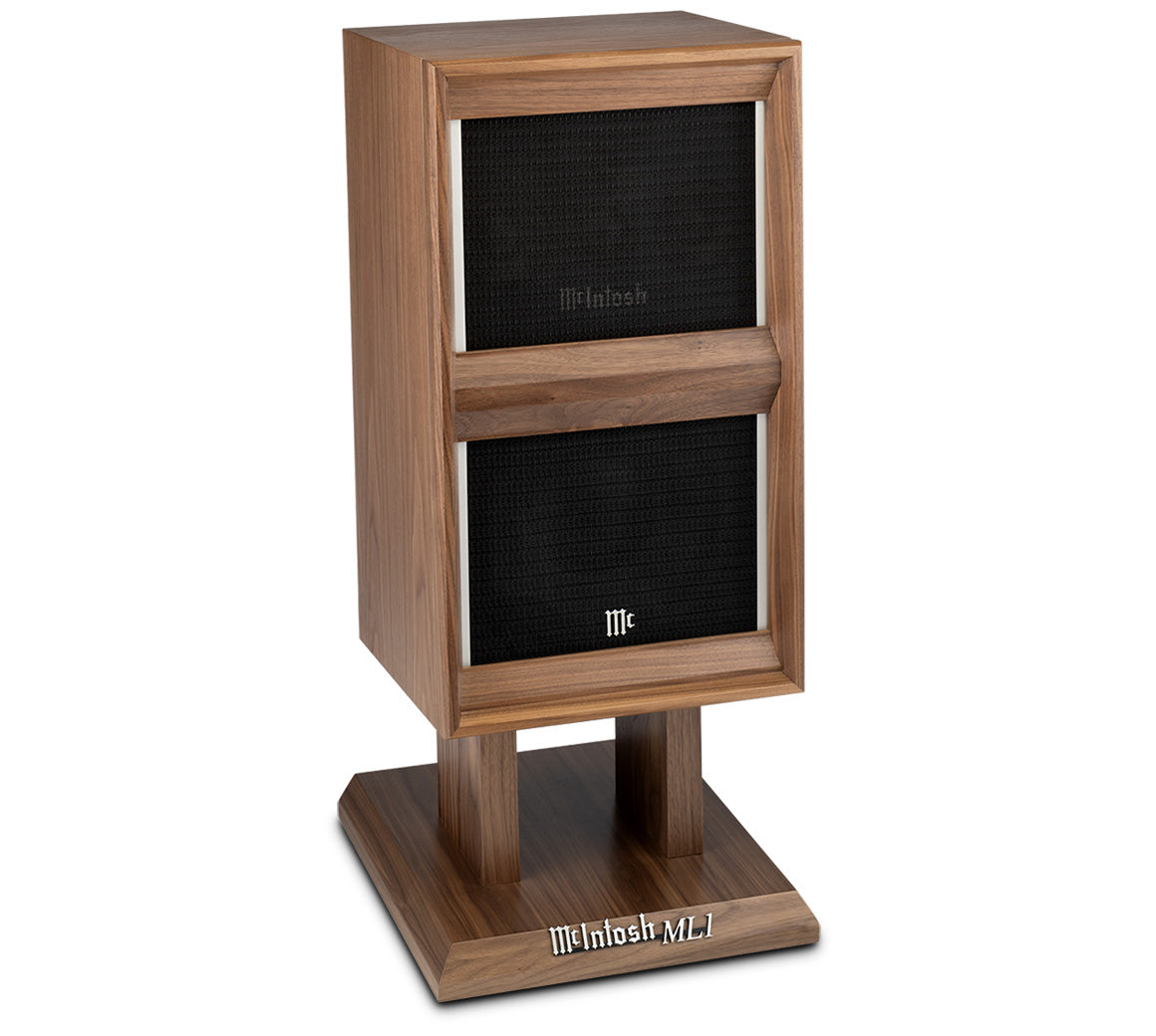
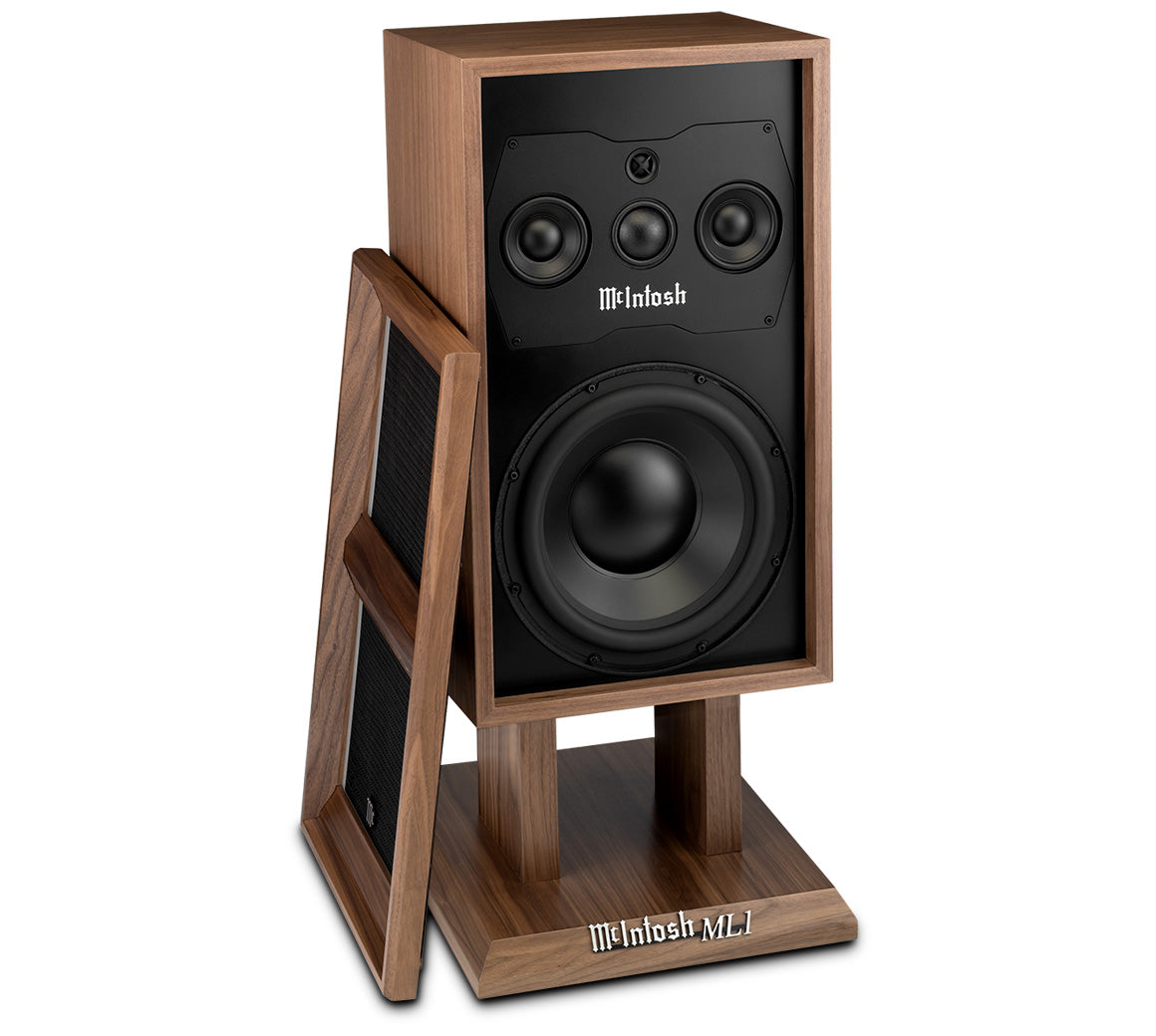
- Magnetically attached wood-framed grille with acoustically transparent black knit cloth
- Matching stands, hard-floor feet, and carpet spikes included
- Five-year McIntosh limited warranty
Vintage McIntosh speaker styling without vintage limitations
The original ML1 was produced from 1970 through 1977 and became known for high output and substantial bass, particularly when used with an external equalizer. The ML1 Mk II preserves the recognizable mid-century proportions but does not simply reproduce the old design. Modern modeling, materials, and crossover development allow the new speaker to achieve deep bass without requiring the external equalizer used with the original.
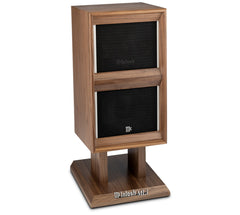
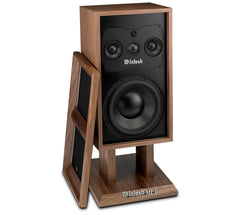
The cabinet is constructed from oiled American Walnut solid woods and veneers with a satin finish. Its magnetically attached grille uses acoustically transparent black knit cloth within a matching wood frame. McIntosh removed the vertical wood slats used on the original grille so the modern cover does not place decorative obstructions directly in front of the drivers.
For shoppers researching McIntosh vintage speakers, the ML1 Mk II provides the appearance and historical connection of a classic model while remaining a current product with modern power handling, driver protection, contemporary binding posts, and a five-year warranty.
A 12-inch woofer built for deep, controlled bass
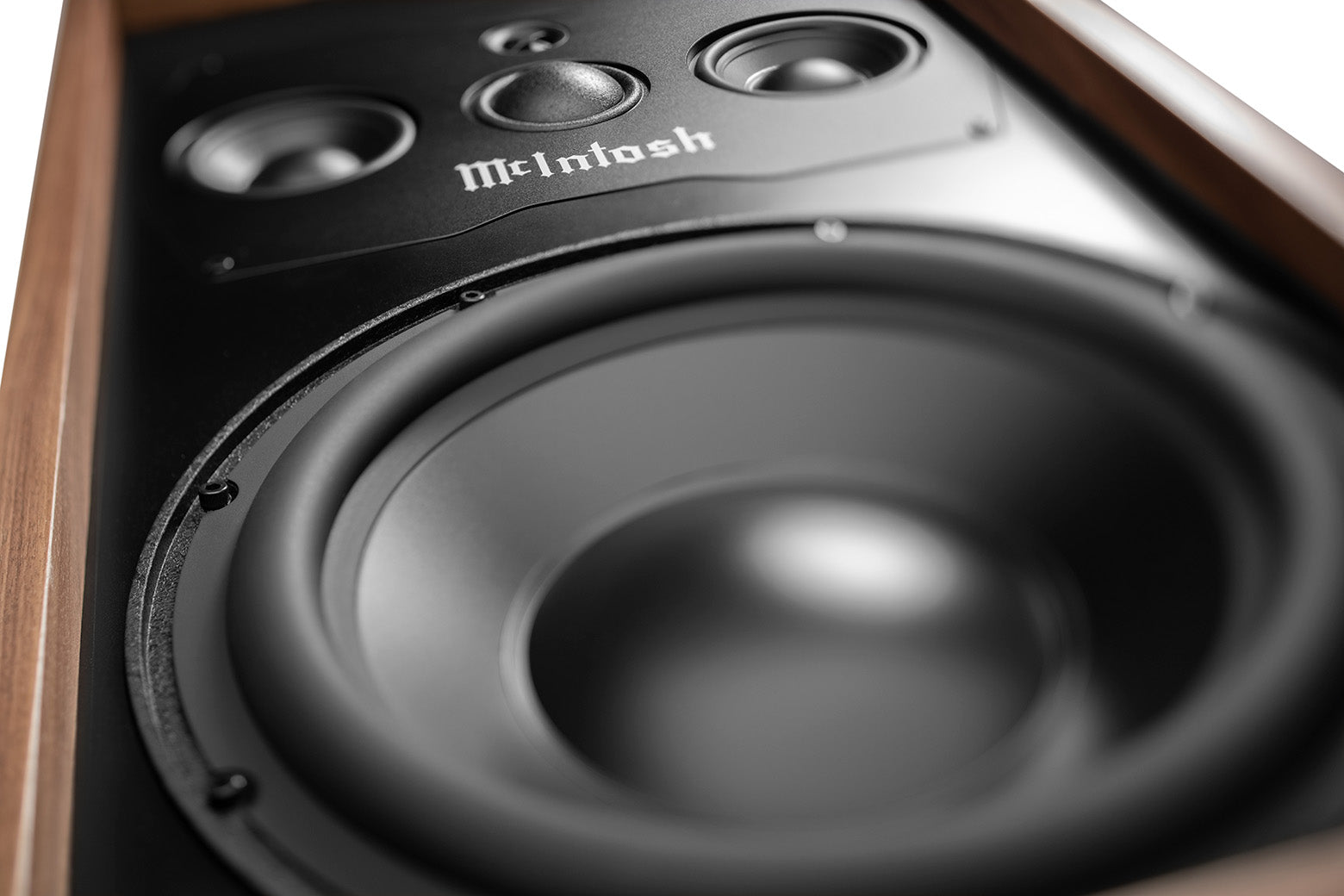
The ML1 Mk II's low-frequency system is based around one 12-inch polypropylene-cone woofer in a sealed acoustic-suspension enclosure. Its rated response reaches 27Hz, close to the lowest frequencies commonly encountered in music. In many two-channel rooms, that extension can provide convincing full-range performance without making a subwoofer mandatory, although room size, placement, playback level, and personal bass preference still determine whether one should be added.
McIntosh uses its patented Low Distortion High Performance, or LD/HP, magnetic-circuit design in the woofer. The technology is intended to reduce distortion while increasing power handling and efficiency. A single 12-inch cone also provides approximately the same radiating surface area as four 6-inch woofers, allowing the ML1 Mk II to move substantial air from one large driver while maintaining the visual and mechanical character of the original design.
The sealed enclosure behaves differently from a rear-ported tower. It does not eliminate the effect of nearby walls and corners, but it avoids the need to leave clearance for a rear port and can provide more predictable low-frequency behavior in rooms where placement options are limited.
Four frequency ranges and five purpose-selected drivers
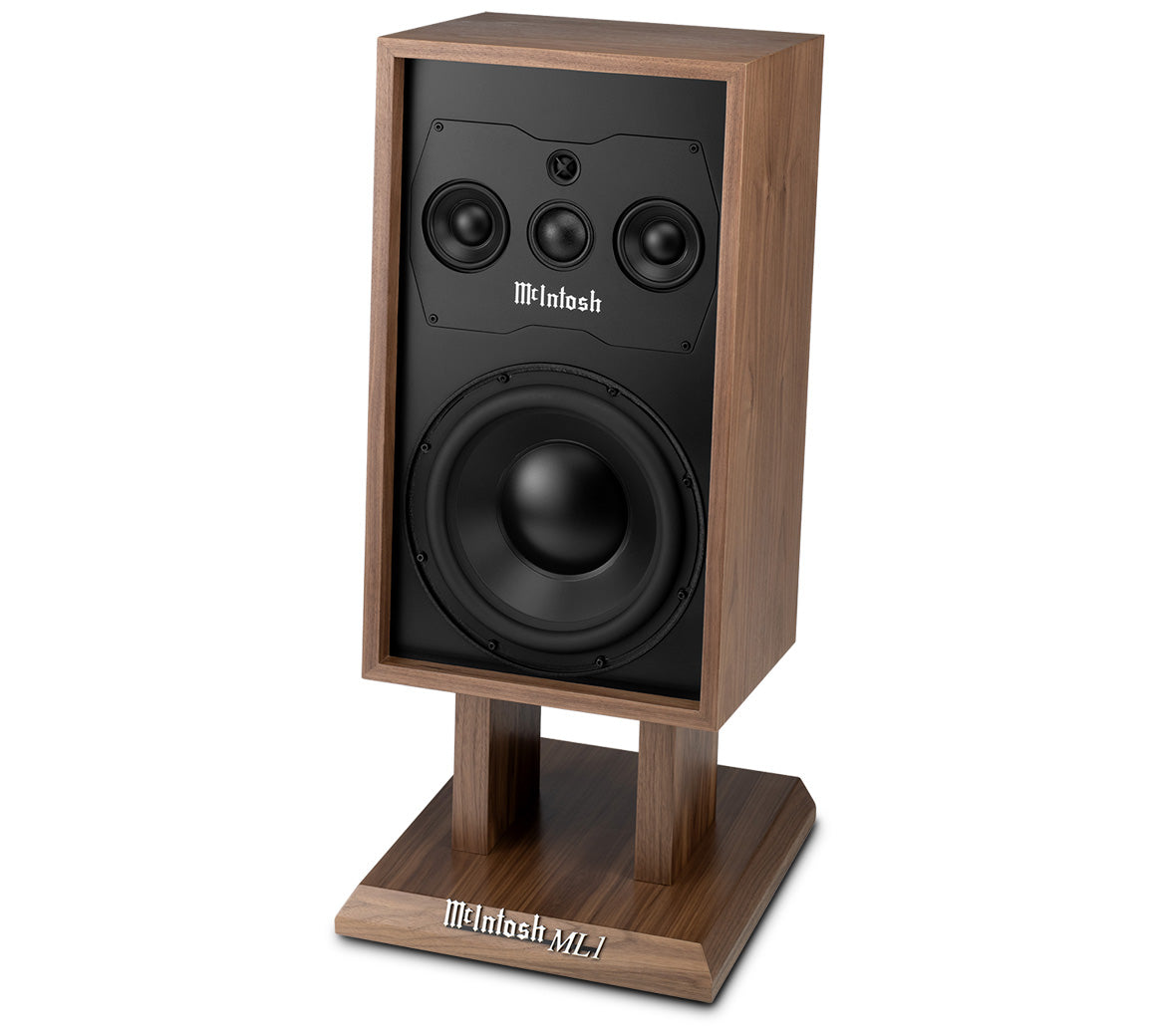
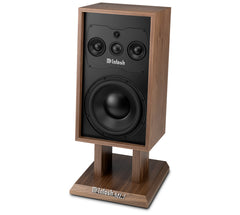
The crossover divides the signal at 180Hz, 500Hz, and 4.5kHz. Below 180Hz, the 12-inch woofer handles the deepest bass. Two 4-inch polypropylene-cone lower-midrange drivers operate in their own sealed internal sub-enclosure, isolating them from the pressure generated by the woofer. A 2-inch soft-dome upper-midrange driver covers the critical transition into the high frequencies, followed by a 3/4-inch titanium-dome tweeter.
Using separate lower- and upper-midrange sections gives McIntosh more control over dispersion and tonal balance through the frequency range where vocals, instruments, and spatial cues are most noticeable. The driver arrangement is symmetrical, so there is no dedicated left and right cabinet. Either speaker can be placed on either side of the system without reversing the intended layout.
The 4-way design and crossover are also engineered to distribute sound over a wider area. The goal is not limited to creating one narrow listening position; the ML1 Mk II is intended to maintain a convincing stereo presentation for more than one person seated in the room.
Crossover design, protection, and amplifier flexibility
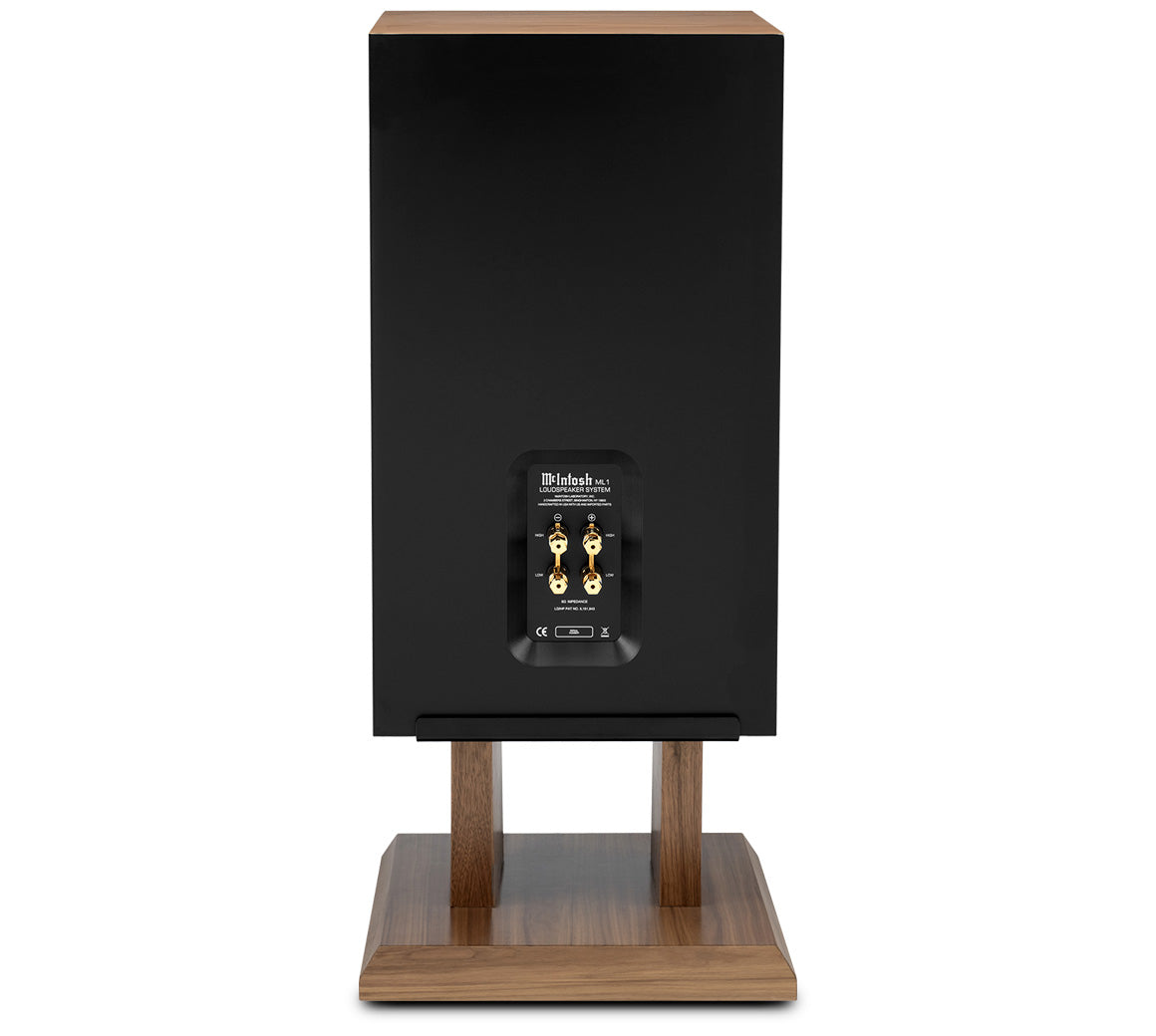
The custom crossover network uses over-specified components for power handling and includes solid-state, self-resetting protection devices to help protect the drivers. The high- and low-frequency crossover sections are separated at the rear connections, allowing the ML1 Mk II to be used with a conventional single-amplifier connection, bi-wiring, or a properly configured bi-amplified system.
Gold-plated McIntosh Solid Cinch binding posts secure the speaker cables and resist corrosion. When bi-wiring or bi-amping is not being used, the factory connection arrangement must remain configured correctly so both frequency sections receive signal. More elaborate wiring does not automatically improve every system; amplifier compatibility, gain structure, cable routing, and the owner's goals should determine whether the additional complexity is worthwhile.
McIntosh specifies amplifiers from 75 to 600 watts. With 85dB sensitivity, the ML1 Mk II benefits from clean power and adequate reserve capacity, particularly in larger rooms or at long listening distances. The broad rating makes it compatible with many integrated amplifiers, stereo amplifiers, tube amplifiers, and monoblocks, but room size and listening level matter as much as the published wattage. Browse McIntosh amplifiers to compare appropriate system architectures.
Included stands designed around the loudspeaker
Each ML1 Mk II includes a matching stand that elevates the cabinet to the intended listening height and places the driver system in a more useful relationship to seated listeners. The stand includes a vintage-style die-cast aluminum McIntosh name badge, feet for hard floors, and spikes for carpet.
The speaker can also be placed directly on the floor or on a suitable piece of furniture, but the included stand is the default arrangement for imaging and presentation. Any alternative support should be strong enough for the 66-pound speaker, stable, level, and free from objects that can vibrate. The speaker and stand together weigh approximately 85 pounds per channel before packaging, so delivery path, stairways, floors, and final placement should be considered before installation.
ML1 Mk II compared with the XR100
The McIntosh XR100 Floor Standing Loudspeaker is a tall, narrow, ported tower that uses four 6-inch woofers and a large vertical array of small midrange drivers. The ML1 Mk II is wider and shorter, uses a sealed cabinet and one 12-inch woofer, and includes matching stands. Both are rated for up to 600 watts and extend well beyond the conventional audible high-frequency range.
The choice between them is not simply a matter of which specification is larger. The XR100 occupies less floor width and suits a contemporary tower-speaker layout. The ML1 Mk II makes a stronger visual statement, has a different bass alignment, and appeals to listeners who want the scale of a large traditional loudspeaker and the design language of classic McIntosh equipment.
Technical specifications
| System type | Sealed 4-way loudspeaker |
|---|---|
| Recommended amplifier power | 75–600 watts |
| Nominal impedance | 8 ohms |
| Sensitivity | 85dB, 2.8V/1m |
| Frequency response | 27Hz–45kHz |
| Crossover frequencies | 180Hz, 500Hz, and 4.5kHz |
| Woofer | One 12-inch polypropylene-cone LD/HP driver with synthetic-rubber suspension |
| Lower midrange | Two 4-inch polypropylene-cone drivers in a sealed sub-enclosure |
| Upper midrange | One 2-inch soft-dome driver |
| Tweeter | One 3/4-inch titanium-dome driver |
| Finish | American Walnut solid woods and veneers with satin finish |
| Grille | Magnetically attached wood frame with acoustically transparent black knit cloth |
| Speaker dimensions | 15 W x 26-1/8 H x 13-3/8 D inches |
| Stand dimensions | 16 W x 10-1/4 H x 16 D inches |
| Speaker weight | 66 lb each |
| Stand weight | 19 lb each |
Frequently asked questions
Is the McIntosh ML1 Mk II price for one speaker or a pair?
The listed price is for a pair of ML1 Loudspeaker Mk II speakers and includes two matching stands.
Are the stands included?
Yes. A matching stand is included for each speaker, along with hard-floor feet and carpet spikes.
Does the ML1 Mk II require the equalizer used with the original ML1?
No. The modern enclosure, woofer, and crossover were designed to provide deep bass response without the external equalizer associated with the original model.
Is there a dedicated left and right speaker?
No. The symmetrical driver layout means either cabinet can be used on either side of the stereo system.
Does it need a subwoofer?
Not necessarily. Its rated low-frequency response reaches 27Hz, which can provide deep full-range music reproduction in many rooms. A subwoofer may still be appropriate for the lowest home-theater effects, unusually large spaces, or listeners who prefer additional bass output.
Can the ML1 Mk II be bi-wired or bi-amped?
Yes. Separate high- and low-frequency connections are provided. Bi-amplification should be planned carefully so amplifier gain, wiring, and system operation remain correct.
Can the speaker be used without its stand?
Yes, McIntosh allows direct floor placement or placement on suitable furniture, but the included stand is engineered to establish the intended height and support optimum imaging.
Match the ML1 Mk II to the complete listening room
The ML1 Mk II combines heritage styling with the requirements of a serious modern loudspeaker. Audio Exchange considers room dimensions, listening distance, support and delivery requirements, amplifier power, cable configuration, bass expectations, and the visual role of the speaker before recommending a system. Compare it with the XR100 and other options in the McIntosh speaker collection.
